


Unique. Handmade. Eternal.
Idea and Sketch
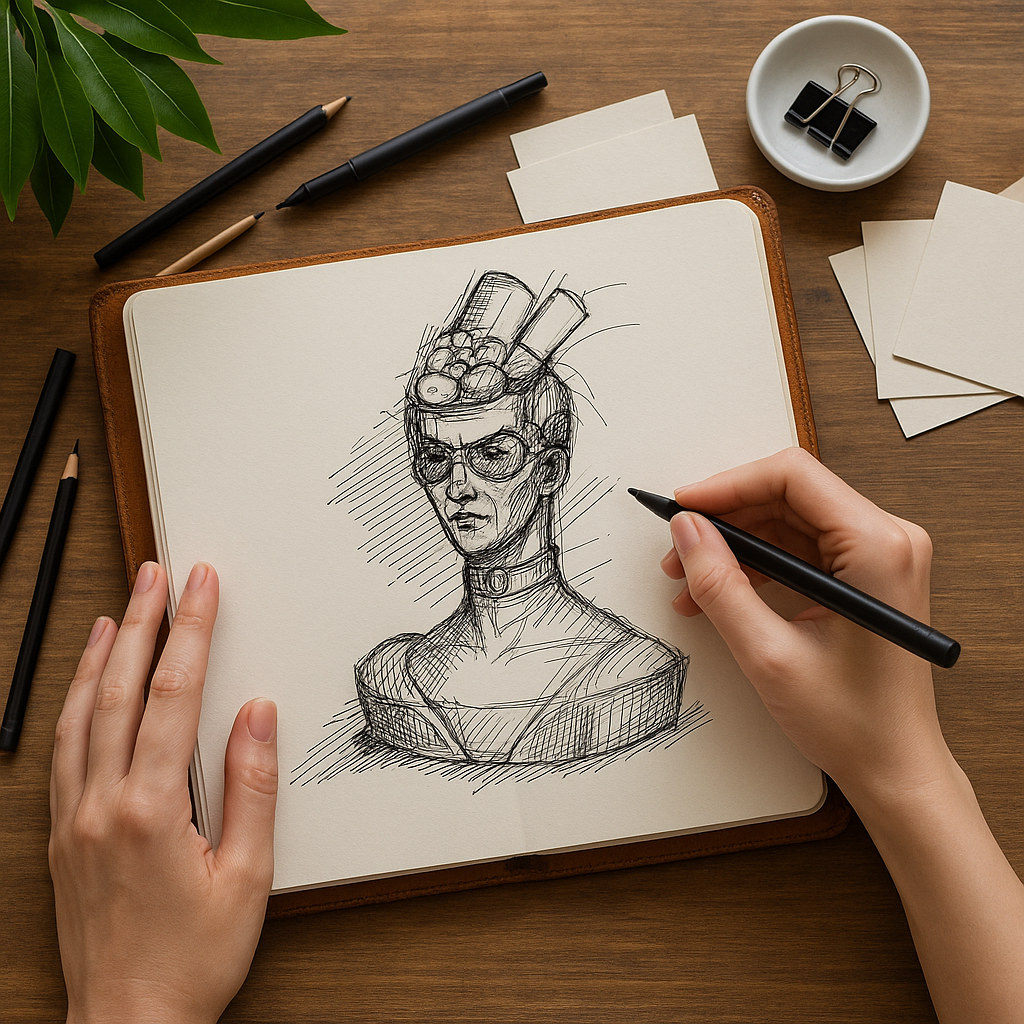
The artist develops the concept of the sculpture and creates basic sketches or a clay model. This initial step is a moment of inspiration and introspective exploration, when form and emotion begin to merge. The artist considers the proportions, character, and symbolism of the figure, sometimes combining multiple ideas into a single vision. The sketches serve as a visual guide but also leave room for improvisation during modeling. During this period, the artist also thinks about materials, potential glazing techniques, and finishing touches, anticipating how the sculpture will “breathe” in space. The idea comes to life in the inner dialogue between the artist and the material, and each sketch carries the potential energy of the final form.
Modeling
The clay is kneaded and prepared to become uniform, without air bubbles, and ready for shaping. It is then shaped by hand or with tools, forming the basic shapes and later the details of the sculpture. Throughout this process, the artist carefully observes the texture and elasticity of the clay, as every nuance of the material affects the final expression. Shaping allows the gradual “awakening” of the figure, where basic proportions transform into recognizable features and details. In this stage, the artist experiments with movement, expression, and surface relief, seeking the perfect balance. Each line and indentation adds emotional depth, and the artist’s hands become an extension of their creative intent. Modeling is the moment when the idea begins to acquire a three-dimensional identity.
Drying Under Controlled Conditions
The sculpture dries slowly, covered so that it has no direct contact with oxygen, allowing the moisture level to remain even. Gradual drying ensures the stability of the material and prevents cracking during the process. Drying is the moment when the physical material “calms down.” Controlling humidity is essential, as drying too quickly or unevenly can cause micro-cracks. Patience in this stage reflects the artist’s philosophy — that every form needs time to become itself. The sculpture slowly transitions from a chaotic material into a shaped entity, ready for firing.
First (Bisque) Firing
After the bisque firing, the sculpture is coated with glaze and then undergoes the final firing. This is also the final stage in the creation process for most sculptures. During the application of glaze, the artist decides on color intensity, contrasts, and possible layers, which can completely change the perception of the piece. The final firing fixes the glaze and simultaneously adds durability to the sculpture. At this moment, creative vision and technical precision merge into a harmonious final form. Glazing is the moment when the artwork acquires its final visual and emotional identity.
Glazing
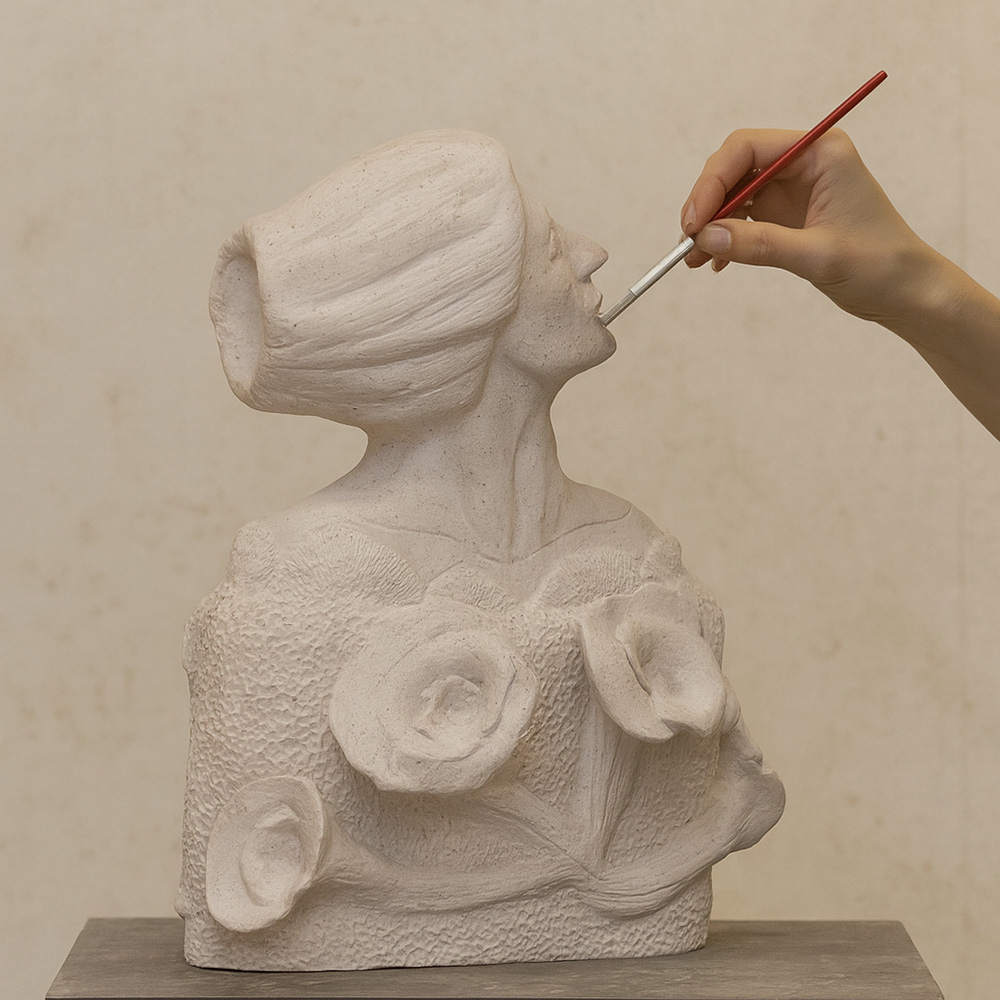
After the bisque firing, the sculpture is coated with glaze and then goes into final firing. This is also the final stage in the creation process for most sculptures. During glazing, the artist chooses the intensity of colors, contrasts, and possible layers, which can completely transform the perception of the work. The final firing fixes the glaze and adds durability to the sculpture. In this moment, creative vision and technical precision blend into a harmonious final form. Glazing is when the artwork gains its ultimate visual and emotional identity.

Gilding (if needed)
After the final firing, certain sculptures may be additionally gilded to achieve a special visual effect. Gilding is fired at a slightly lower temperature than bisque and glaze firings — around 700°C — and lasts about 2 hours. This step adds luxury and emphasizes specific details or contours, making the sculpture even more captivating. The artist uses this technique to highlight particular features and complete the overall impression of the piece. Gilding creates additional visual contrast, emphasizing the layered form and richness of the material. With this, the sculpting process is completed, and the piece becomes a finished, independent work of art.